The underground hip-hop scene is the network of artists, independent labels, local crews and fans that makes rap outside the commercial mainstream. It is not one sound or one place. It is a way of working: artistic control first, radio-friendly polish second. If you want to hear it rather than read about it, KFRP Radio streams underground and classic hip-hop, dark rap and instrumentals around the clock from Lincoln, Nebraska, with no fake DJs and no filler.
This guide explains what the word "underground" really covers, how the scene formed, what it tends to sound like, how local communities keep it alive, and how listeners and artists can plug in.
TL;DR
- Underground hip-hop means music made outside the commercial canon, usually by independent artists with more control over their work. Scholars treat it as a shifting position, not a strict line.
- It grew from New York block parties in the early 1970s, and it surged again in the late 1990s as a reaction to crossover success.
- Local scenes, such as the Bay Area and Los Angeles's Project Blowed, built the culture through open mics, battles and community support.
- You can listen to it free on KFRP Radio in 320kbps MP3 or lossless 24-bit FLAC, and artists can send music in for possible airplay.
Table of Contents
- What "underground" actually means
- How underground hip-hop sounds and what it talks about
- Where the scene came from
- The local scenes that built the culture
- Independence, control and the fight over autonomy
- How to tell if you will like it
- Listen to the underground, in the quality it deserves
- For artists: getting your music into the underground
- What the scene is not
- FAQ
- Sources
What "underground" actually means
Ask ten fans and you will get ten definitions. The most useful one comes from academic work on the subject: a University of California, Riverside dissertation describes underground hip-hop as music created outside the commercial canon, while "independent" hip-hop more specifically means music from established independent labels outside the three major labels. The same work stresses that mainstream and independent are overlapping, changing positions rather than a strict binary.
That matters in practice. A rapper can sell out theaters and still be called underground by fans because of attitude and sound. Another can sit on a tiny label and chase radio hits. So when someone says "non-mainstream hip-hop," they usually mean some mix of three things:
- Who owns the work. Independent labels, self-releases, small crews.
- How it sounds. Rougher, stranger or denser than what charts reward.
- What it is for. Skill, community and expression rather than a hit single.
A simple working definition for a listener: underground hip-hop is rap where the artist's own vision outranks the market's.
How underground hip-hop sounds and what it talks about
There is no fixed checklist, and anyone who gives you one is simplifying. Still, one long-running fan discussion describes underground songs as often lyric-heavy, with down-and-dirty beats and arrangements that can be complex and less immediately appealing than radio fare. The same piece is clear that these are tendencies, not defining traits.
In practice that spans a wide range:
- Boom-bap and sample-driven rap, with dusty drums and a lyric-first approach.
- Dark rap and dark trap, with heavy bass, ominous melodies and confrontational delivery.
- Instrumentals, where the producer is the headliner and the beat carries the whole mood.
- Experimental and abstract styles, where structure and flow bend the rules.
Themes: not one message
Underground does not automatically mean political or progressive, and the research says so plainly. Sociologist Matthew Oware's 2014 study of popular underground rappers found political and anti-establishment themes alongside misogyny and hypermasculinity, and it describes underground rap as blurring the line between restricted and commercial production. The takeaway for a listener is simple: the underground is a space of unfiltered voices, so expect rawness, conflict and contradiction, not a single worldview.
That is exactly why many fans come to it. When an artist is not writing for a focus group, the music can be confrontational, bleak, funny, technical or all of the above in the same verse.
Where the scene came from
The early 1970s: block parties and breaks
Hip-hop itself began underground in the sense that it began outside the industry. Steven Gamble's Oxford Academic chapter places its origins in early-1970s New York house and block parties, where DJs extended the funk and disco breaks and MCs developed rhythmic vocal performance alongside breaking and graffiti. Nobody was signing deals yet. It was a neighborhood culture.
1998: the underground answers the crossover
As rap went pop, a counter-movement formed. The Grammy Museum-style retrospective on the year describes the 1998 underground rise as a response to crossover success and mainstream consumerism, with renewed interest in DJs, b-boys and graffiti artists alongside rappers. It points to Mos Def and Talib Kweli's Black Star album, released that year, as a prominent underground statement critical of consumerism and some mainstream lyrical conventions.
That period set a template that still shapes the scene: independent releases, a loyal core audience and a belief that credibility comes from the craft.
The internet era
The scene has always traveled through whatever channel was available. WIRED's September 1997 report on early online hip-hop described networks linking independent sites, fans, DJs and MCs, with turntablists using web directories to collaborate across distance. Gamble's chapter traces the path from early forums and websites through the blog and mixtape era, Myspace, YouTube and later streaming platforms.
One encyclopedia entry on rap notes that underground rap has often relied on regional and local development, while internet-distributed MP3s let networks cross local, regional and international borders. A kid in a small Midwestern city could suddenly hear, and be heard by, people thousands of miles away.
The local scenes that built the culture
The underground is not an abstraction. It lives in rooms, on stages and in cities. Two well-documented examples show how.
The San Francisco Bay Area
Anthony Kwame Harrison's ethnography Hip Hop Underground is described by its publisher as presenting the Bay Area underground as a racially diverse, close-knit scene where participants use hip-hop to negotiate identity and authenticity. That is a useful reminder that "underground" is also a social world with its own norms about who is respected and why.
Los Angeles and Project Blowed
Marcyliena Morgan's book on Project Blowed, as described by Duke University Press, tells how the workshop grew from open-mic nights that moved to the KAOS Network in Leimert Park in 1994. It emphasizes freestyle, lyrical battles, skill and community support. The workshops and battles develop artistic skills and cultural knowledge, and material and moral support keeps the scene going.
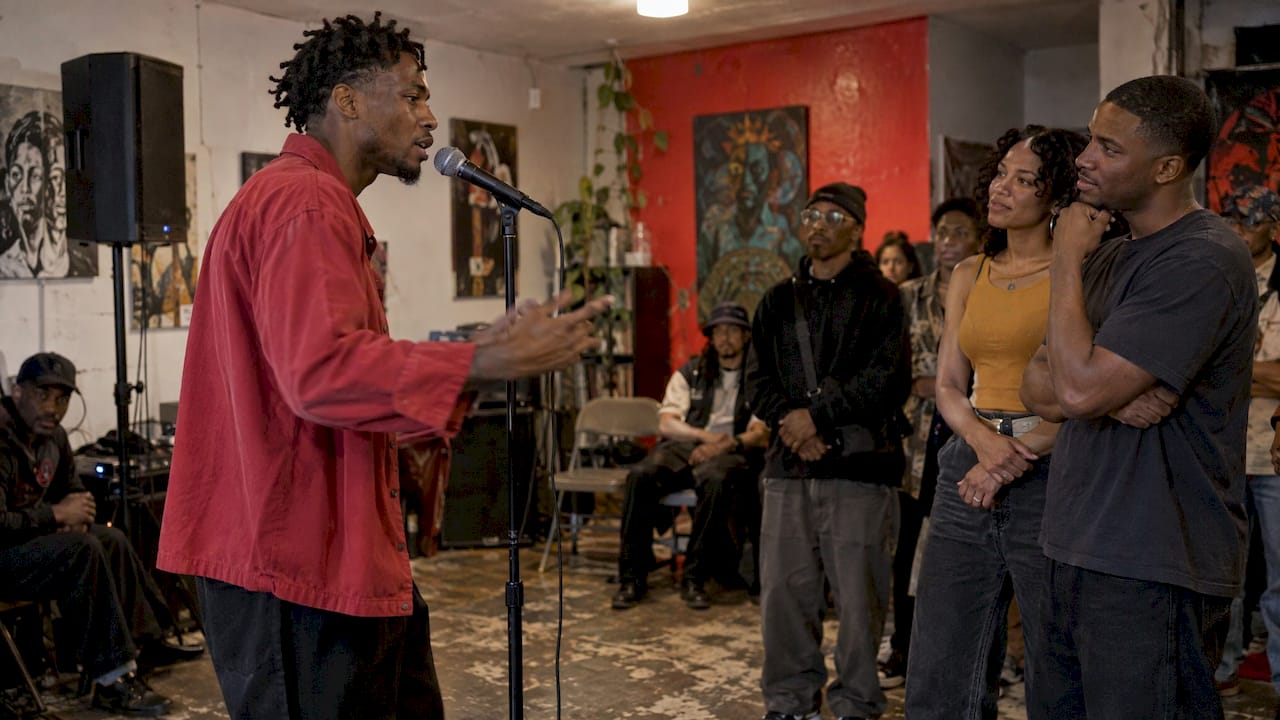
The pattern repeats from city to city. Gamble describes hip-hop spreading internationally through records, radio, film and local adaptation, with city scenes developing distinct local inflections rather than copying one sound. Even abroad, a Georgetown University thesis on Chinese hip-hop notes that underground channels and online communities helped the culture develop before a 2017 talent show brought it mainstream exposure.
Independence, control and the fight over autonomy
Why do underground artists care so much about staying independent? The Riverside dissertation records that late-1990s and 2000s debates in independent hip-hop often concerned artistic control, autonomy, profit and resistance to major-label influence.
For a listener, that translates into something you can hear. When an artist controls the beat selection, the track order and the tone, the project tends to feel like one person's world instead of a collection of singles. A label-run station can reflect that: KFRP Radio is the official internet station of Killing Field Records and builds its core rotation around the label's own artists, such as Jinx and Cryptic-X, alongside influential underground hits. The result is a station with a point of view rather than a generic playlist.
How to tell if you will like it
If you are new, do not start by memorizing a canon. Start by noticing what grabs you.
- Lean toward lyrics? Listen for dense writing, internal rhyme and storytelling.
- Lean toward atmosphere? Dark rap, dark trap and instrumentals put mood first.
- Lean toward nostalgia? Classic hip-hop and sample-based production connect the underground to its roots.
- Lean toward raw energy? Confrontational, unfiltered vocals are the hallmark of the harder end of the scene.
Then follow the thread: a name in the credits, a producer on two tracks you like, a label that keeps showing up. That is how most fans have always discovered underground music.
Listen to the underground, in the quality it deserves
Discovery works best when someone else has done the sorting. KFRP Radio plays underground and classic hip-hop, dark rap, dark trap and instrumentals 24/7, and it runs without fake DJs or filler, so what you hear is the music itself. Streaming is free.
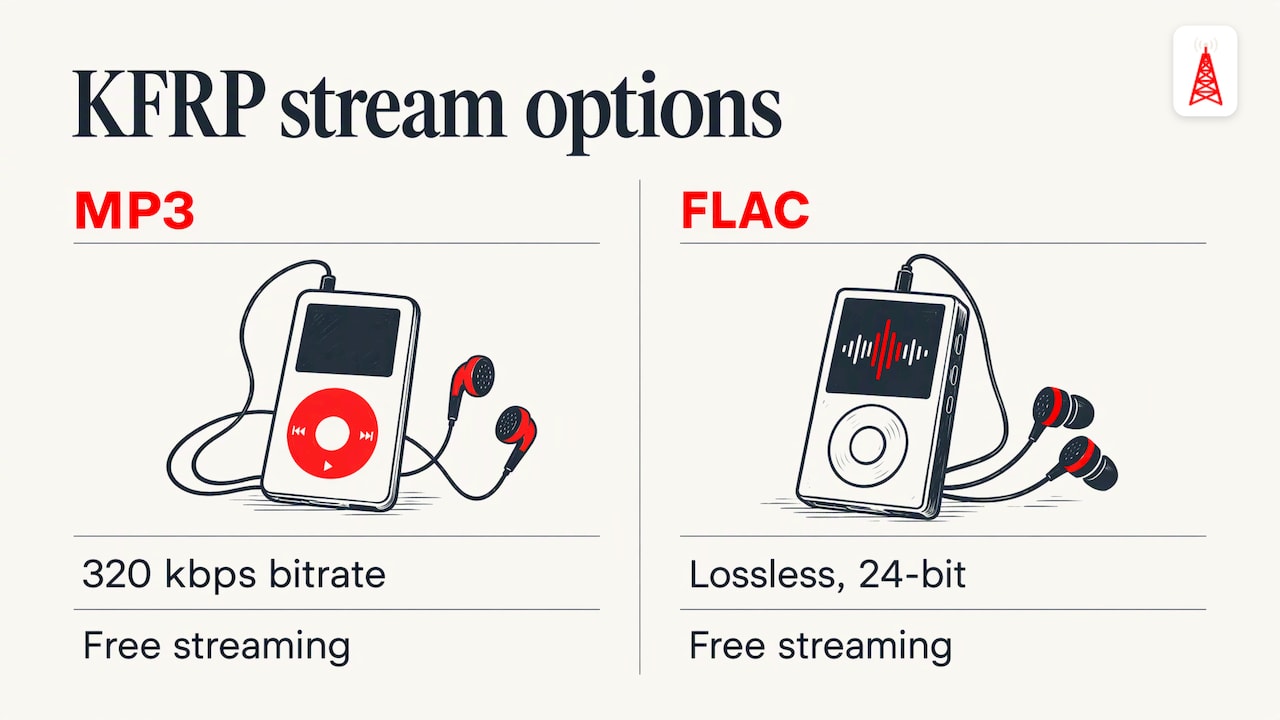
For listeners who care about sound, there are two streams: a 320kbps MP3 stream and a lossless 24-bit FLAC stream. Heavy low end and layered samples are exactly the material where higher-quality audio pays off through good headphones or speakers. You can pick a stream, a web player or a directory player on the KFRP listening page, or head to the KFRP Radio homepage to start playing.
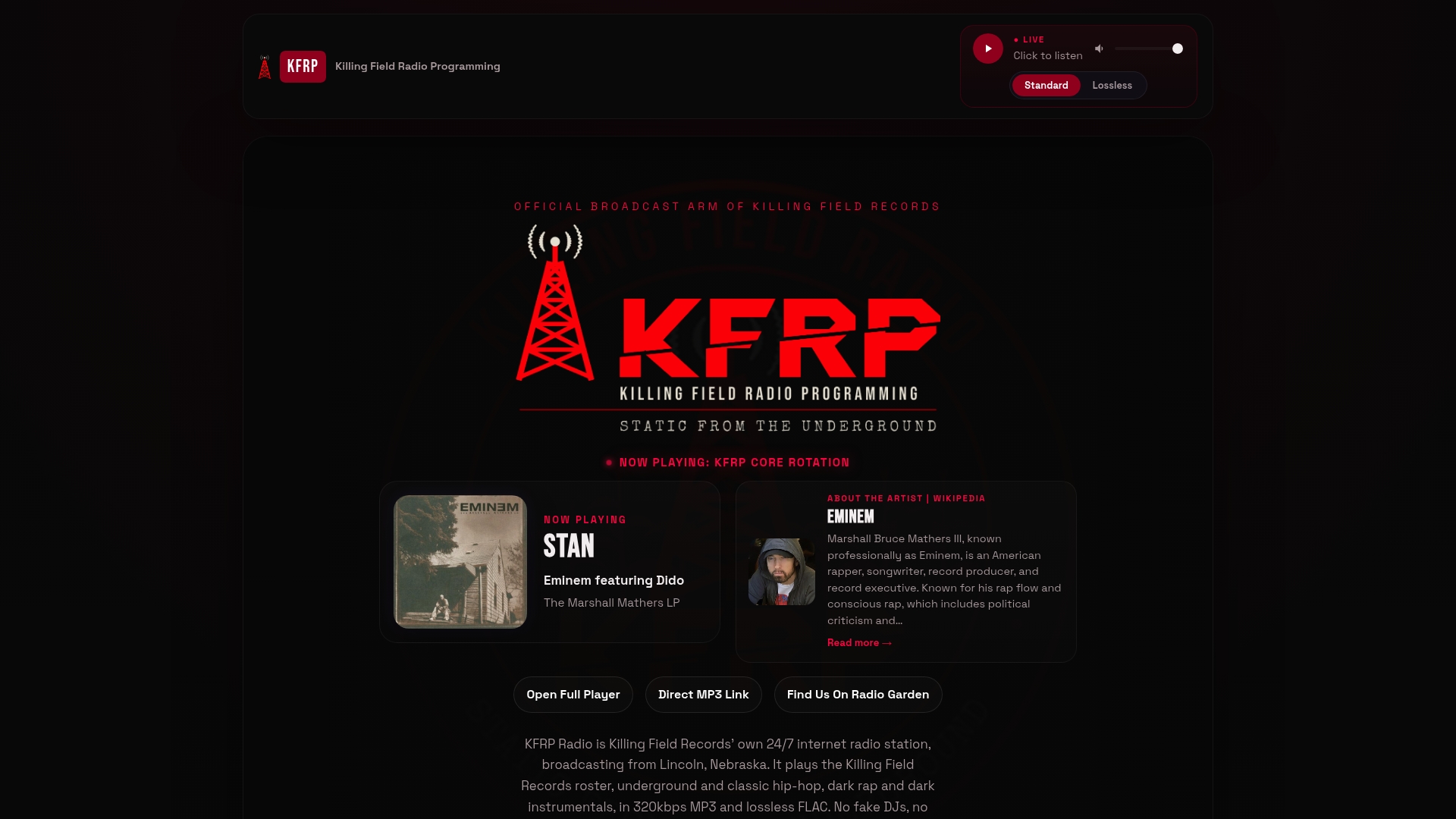
Leave it running while you work, drive or dig through the artists you hear. When a track hits, note the name and follow it from there.
For artists: getting your music into the underground
The underground has always rewarded people who build their own routes. Early online networks let independent artists and DJs find one another across distance, and the same logic holds today: release your work, connect with other artists, show up in your local scene and keep making music.
One concrete step is a radio that is open to unsigned and independent work. KFRP accepts music submissions from artists for possible airplay. Be clear about the terms: the station does not charge artists for airplay, and its submission terms also state that it does not pay artists for airplay. If your sound fits underground hip-hop, dark rap, dark trap or instrumentals, you can send your tracks through the KFRP submission page.
A few habits make a submission stronger:
- Send your best finished work, mixed and mastered as well as you can manage.
- Match the station's lane. Raw, confrontational hip-hop, dark rap and instrumentals are the core.
- Label your files and links clearly so the track and artist name are easy to find.
- Keep building around it: shows, collaborations and a consistent release rhythm.
What the scene is not
Two misconceptions come up constantly.
"Underground means unpopular." Not necessarily. Underground is about position and attitude, and the research stresses that positions overlap and shift over time. Plenty of artists have large followings without moving to the commercial center.
"Underground means conscious." As the Oware study shows, underground rappers can mix political critique with other themes that are far less progressive. The label tells you about independence, not about the message.
Holding both ideas loosely will make you a better listener, and a better judge of what is actually good.
FAQ
What is considered underground hip-hop?
It is hip-hop made outside the commercial canon, usually by independent artists who keep more creative control. Scholars describe the line between underground, independent and mainstream as overlapping and changing rather than fixed. In everyday use, it also signals a rawer, more lyric- or mood-driven sound.
Is non-mainstream hip-hop the same as underground hip-hop?
The terms overlap heavily. Non-mainstream is the broader umbrella for music that does not follow chart conventions, while underground often adds a culture of local scenes, independent labels and a loyal core audience. Most fans use them interchangeably.
Where can I listen to underground hip-hop for free?
KFRP Radio streams underground and classic hip-hop, dark rap and instrumentals 24/7 at no cost. You can choose a 320kbps MP3 stream or a lossless 24-bit FLAC stream, through web and directory players. The listening page lists the options.
Can I submit my own music to an underground radio station?
Yes. KFRP Radio accepts submissions from artists for possible airplay through its submission page. The station does not charge artists for airplay and does not pay artists for airplay.
How did the underground hip-hop scene start?
Hip-hop began in early-1970s New York block parties, where DJs and MCs created the culture outside the industry. A distinct underground movement then grew strongly in the late 1990s as a response to rap's crossover success, and the internet later connected local scenes worldwide.
Sources
- Christopher Sangalang Vito, University of California, Riverside dissertation on independent hip-hop
- Matthew Oware, (Un)conscious (popular) underground, 2014
- What is underground anyway? (Ambrosia for Heads)
- Steven Gamble, How Hip Hop Became the Leading Music Genre in the Digital Age (Oxford Academic)
- Why 1998 Was Hip-Hop's Most Mature Year (GRAMMY.com)
- Chip Hop (WIRED, 1997)
- Rap Music (Encyclopedia.com)
- Hip Hop Underground by Anthony Kwame Harrison (Temple University Press)
- The Real Hiphop by Marcyliena Morgan (Duke University Press)
- Keep It "Skr": hip-hop subculture in China (Georgetown University repository)